
American Theme Park Family Destinations USA: Expert Guide & Strategy
Evaluating the intersection of large-scale entertainment infrastructure and multi-generational domestic tourism reveals a cornerstone sector of the North American leisure economy. The contemporary landscape of heavily engineered recreational spaces has evolved past simple midway amusements or seasonal carnivals, transforming into complex, high-capital resort ecosystems. When households plan major excursions, their choices mirror deeper cultural shifts toward immersive storytelling, shared digital-physical engagement, and meticulously managed escape.
Navigating this specialized asset class requires moving beyond promotional marketing collateral to examine the structural mechanics that govern guest flow, spatial capacity, and operational economics. Properties designed to absorb tens of thousands of daily visitors while maintaining high narrative fidelity must balance crowd psychology with complex mechanical engineering. Consequently, understanding the broader mechanics of major leisure destinations offers essential insight into how modern family units consume large-scale commercial entertainment.
This analysis establishes an exhaustive framework for evaluating the architectural, economic, and operational dimensions of the nation’s premier recreational hubs. By tracing historical shifts in mid-century midway design, examining conceptual asset models, and evaluating crowd risk management strategies, this resource serves as a definitive professional reference for long-term travel authority and industry analysis.
Understanding american theme park family destinations usa
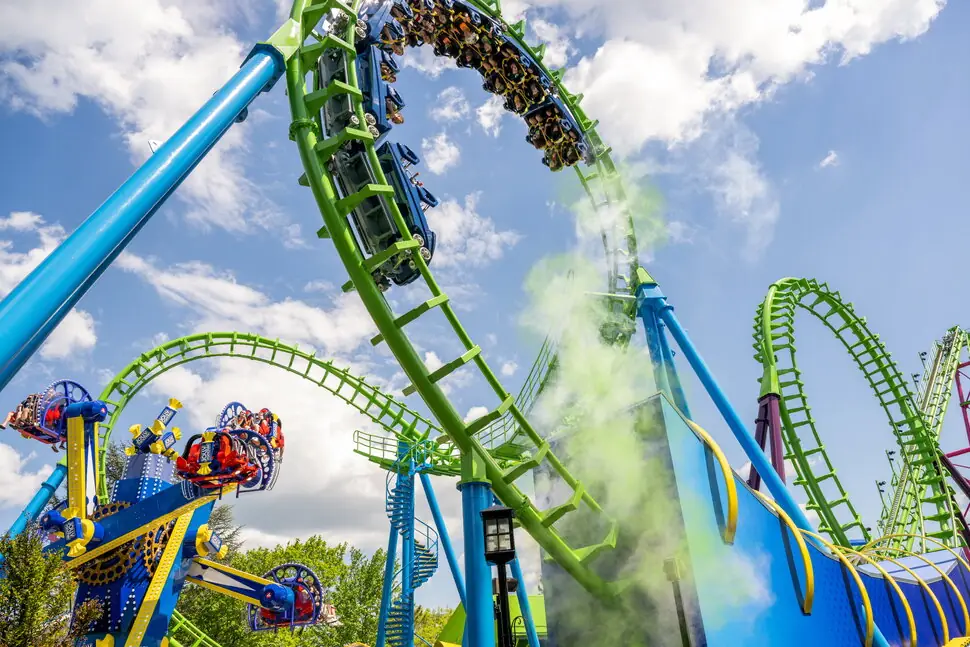
The phrase american theme park family destinations usa is frequently treated in consumer travel columns as a casual shorthand for Orlando resorts or regional roller coaster parks. In professional hospitality asset management, leisure economics, and cultural analysis, however, mastering american theme park family destinations usa demands a rigorous, multi-variable framework. Analysts must categorize this sector by intellectual property saturation, daily ride capacity metrics, queue architecture, and multi-generational dwell-time distributions. A primary error among casual observers involves assuming that all large-scale parks operate under uniform guest satisfaction models, ignoring how regional properties—such as historic woodland amusement parks in the Midwest or hyper-dense destination resorts in Florida and California—cater to fundamentally different visitor cadences and endurance thresholds.
A critical risk when evaluating american theme park family destinations usa involves underestimating the psychological and physical friction inherent in high-stimulus environments. Unlike passive vacation formats, large-scale commercial leisure requires rigorous personal scheduling, constant environmental navigation, and exposure to intense sensory stimuli. Consequently, learning american theme park family destinations usa requires comprehensive spatial literacy, an understanding of dynamic pricing models, and an appreciation of how physical architecture dictates family harmony or exhaustion during extended park visits. True analytical mastery rests in recognizing that sustainable park enjoyment depends on balancing high-octane attraction pacing with deliberate rest intervals.
The Historical Evolution of Domestic Amusement and Immersive Entertainment
The development of family-oriented entertainment complexes across the United States reflects profound shifts in urban planning, middle-class disposable income, and cinematic storytelling. During the late nineteenth and early twentieth centuries, regional trolley parks and coastal boardwalks provided transient weekend entertainment for industrial cities. These early properties relied on mechanical novelties like wooden roller coasters and hand-carved carousels to offer brief respites from urban congestion.
The mid-twentieth-century opening of Disneyland fundamentally disrupted this model by introducing comprehensive environmental control, cinematic world-building, and strict operational curation. Hospitality conglomerates recognized that capturing the domestic travel market required replacing fragmented carnival midways with cohesive narrative universes. Today, understanding american theme park family destinations usa requires navigating this mature commercial landscape, where mid-century nostalgia merges seamlessly with multi-billion-dollar intellectual property lands, augmented reality integration, and fully integrated resort hotels.
Conceptual Frameworks for Asset Evaluation
Assessing the spatial efficiency, crowd absorption capacity, and experiential viability of major recreational properties requires rigorous analytical mental models:
-
The Hourly Attraction Capacity Index: Evaluates the ratio of ride throughput velocity against total daily park attendance to measure realistic queue wait times.
-
The Narrative Immersion Gradient: Measures how completely physical architecture, costuming, and acoustic design isolate visitors from the surrounding external world.
-
The Generational Inclusivity Coefficient: Quantifies a property’s ability to simultaneously engage toddlers, teenagers, parents, and grandparents without excluding specific age brackets.
-
The Spatial Dwell-Time Model: Analyzes how property layout, shade availability, and seating density impact visitor fatigue and expenditure patterns throughout the day.
Key Categories and Structural Trade-offs
| Resort Asset Category | Primary Operational Advantage | Structural and Financial Trade-off |
| Destination Multi-Park Mega-Resorts | Unrivaled intellectual property integration, multi-day capacity, and on-site lodging | Exorbitant baseline costs, extreme crowd densities, and mandatory advance planning |
| Regional Roller Coaster Capitols | World-class thrill engineering, high-velocity ride portfolios, and lower admission tariffs | Minimal thematic storytelling, limited appeal for non-thrill-seeking family members |
| Boutique Regional Family Parks | High cleanliness standards, manageable scale, local charm, and relaxed pacing | Smaller ride inventory and limited multi-day operational depth |
| Historic Coastal Boardwarks | Open public access, free admission structures, and authentic nostalgic atmosphere | Weather vulnerability, high maintenance wear from salt air, and parking congestion |
| Zoned Eco-Theme Complexes | Integration of live wildlife education with traditional family entertainment | Strict animal management constraints and limited evening operating hours |
| Indoor Hybrid Waterpark Hubs | Climate-controlled weather independence and year-round operation | High indoor humidity, dense noise pollution, and steep daily facility surcharges |
When applying decision logic to these categories, family planners must align group travel constraints with economic realities. For instance, families traveling with young children during peak summer heat will extract high structural value from indoor hybrid complexes or shaded regional parks despite smaller ride footprints. Conversely, families with thrill-oriented teenagers will lean toward destination mega-resorts or dedicated coaster capitols.
Detailed Real-World Scenarios and Decision Logic
Scenario 1: Managing Queue Friction at a Destination Mega-Resort
An extended family of six visits a premier Orlando theme park during a peak holiday visitation window.
-
Constraint: Standard standby lines exceed 120 minutes per major attraction, triggering severe behavioral fatigue among younger children and older adults.
-
Failure Mode: Attempting to navigate the park without a structured queue-management strategy results in completing only three rides over a ten-hour day, destroying group morale.
-
Decision Point: Implement a hybrid touring plan combining early morning rope-drop access with pre-booked digital line-skip systems and mandatory air-conditioned midday breaks outside the park gates.
Scenario 2: Balancing Thrill Tolerance at a Regional Coaster Park
A multi-generational family group visits a major roller coaster capitol in the Midwest.
-
Constraint: Teenage members demand high-g-force hypercoasters, while grandparents and pre-teens require gentle family rides or flat attractions.
-
Failure Mode: Group fragmentation causes chronic separation anxiety and administrative friction regarding who waits with non-riding members.
-
Decision Point: Establish designated meeting zones and scheduled joint meal times, pairing high-thrill hours with all-ages water rides and stage shows that accommodate the entire roster simultaneously.
Planning, Cost, and Resource Dynamics
Executing effective travel planning across major domestic entertainment complexes requires understanding economic trade-offs. Gate admissions, priority queue surcharges, resort hotel tariffs, and food-and-beverage inflation present distinct financial footprints. Furthermore, dynamic seasonal pricing heavily influences family travel budgeting.
| Financial Variable | Economic Variability | Strategic Impact on Park Planning |
| Dynamic Gate Admissions | Extreme (Holiday Surges) | Shifting travel dates to low-demand mid-week windows reduces ticket costs by 20% to 30% |
| Priority Access Surcharges | High (Per-Person Daily) | Skipping standard queues requires significant additional per-capita daily investments |
| On-Site Resort Lodging Tariffs | High | Staying within official resort bubbles unlocks early entry perks but commands steep room rates |
| Inside-the-Gate Dining Overhead | Moderate to High | Captive food markets inflate daily incidental expenditures across multi-day stays |
Tools, Strategies, and Support Systems
-
Official Park Companion Applications: Digital tools utilized for real-time wait-time tracking, mobile food ordering, and virtual queue management.
-
Crowd Calendar and Historical Data Trackers: Specialized predictive analytics software used to identify low-density park attendance dates months in advance.
-
Structured Touring Plan Algorithms: Custom itinerary generators designed to minimize walking distance and maximize ride completion metrics.
-
Ergonomic Park Gear Manifests: Specialized lists covering hydration packs, portable seating, cooling towels, and weather protection.
-
On-Property Luggage and Package Services: Resort logistics systems that allow guests to ship merchandise directly back to hotel rooms, eliminating park carriage burdens.
Risk Landscape and Failure Modes
The primary hazard inherent in major theme park travel is cognitive and physical overload. Because destination parks are engineered environments designed to stimulate continuous consumer engagement, visitors frequently ignore basic biological signals regarding hydration, rest, and thermal regulation. Planners who fail to budget downtime into their daily itineraries expose their households to severe exhaustion, heat-related illness, and interpersonal friction. Falling into the trap of attempting to maximize every operating minute accounts for critical on-site burnout.
An internal operational failure mode involves sudden weather disruptions and mechanical attraction downtime. When torrential downpours or high winds force outdoor rides to close simultaneously, indoor spaces experience catastrophic crowd compression. Unprepared travelers discover that shelter options are inadequate, transforming a dream vacation into a frustrating exercise in shelter-seeking.
Governance, Maintenance, and Long-Term Adaptation
Maintaining travel satisfaction across repeated generational visits requires a disciplined, iterative review methodology. Prudent planners must conduct post-trip asset evaluations. Specifically, they should audit whether their chosen park destination successfully balanced high-capacity ride operations with adequate crowd control and dining availability. If historical data reveals that a particular resort asset suffered from chronic ride breakdowns or unmanageable congestion, subsequent travel planning criteria must adjust park selection or timing.
Additionally, family organizers should maintain a centralized travel intelligence archive. If family demographics shift—such as young children growing into teenagers who demand high-thrill inventory—subsequent destination parameters must scale upward. This ensures long-term financial predictability without sacrificing generational engagement.
Measurement, Tracking, and Evaluation Frameworks
-
Attraction Yield Ratio: Quantifies the number of completed rides or shows per hour spent inside the active park perimeter.
-
Generational Comfort Index: Measures subjective family satisfaction and stress levels relative to crowd density and weather exposure.
-
Financial Value Variance: Assesses whether premium ticket tiers and queue-skipping surcharges delivered proportional time-saving value compared to standard entry.
-
Rest-to-Activity Ratio: Evaluates the balance of time spent seated or resting versus time spent standing in queues or walking across asphalt lots.
Common Misconceptions and Oversimplifications
-
Myth: “Arriving at park opening guarantees immediate access to major headline attractions with zero wait.” Reality: Rope-drop arrival triggers massive surges where thousands of guests rush identical anchor rides, creating instant 90-minute queues.
-
Myth: “Staying at an official resort hotel eliminates all transportation and crowd hassles.” Reality: While official hotels offer perks like early entry, bus loops and monorail networks frequently experience severe peak-hour bottlenecks.
-
Myth: “Buying the most expensive line-skipping pass ensures a completely seamless, wait-free day.” Reality: Premium passes still feature return-time windows, capacity caps, and walking distances that require careful strategic coordination.
-
Myth: “Visiting theme parks during autumn or winter guarantees cool weather and empty midways.” Reality: Major holiday events, special ticketed parties, and convention overlaps frequently drive massive off-season attendance spikes.
-
Myth: “All theme parks provide equal entertainment value for toddlers, teenagers, and older adults.” Reality: Many regional parks focus heavily on extreme thrill coasters or young children’s play areas, leaving middle generations with limited options.
-
Myth: “Reading standard online review ratings is sufficient to evaluate a park’s daily crowd dynamics.” Reality: General reviews reflect subjective visitor moods often skewed by unexpected weather or ride closures rather than structural capacity metrics.
Ethical, Practical, and Contextual Considerations
The economic dynamics of large-scale commercial entertainment also intersect heavily with regional labor markets, corporate intellectual property monopolies, and municipal infrastructure strain. When major entertainment operators invest in sustainable waste management, local workforce development, and public transit integration, they help mitigate the environmental footprint of millions of annual visitors. Forward-thinking travelers balance personal entertainment desires with systemic awareness, choosing to support resort operators who maintain high labor standards and environmental stewardship alongside world-class guest experiences.
Conclusion
Mastering destination selection within commercial family entertainment requires an uncompromising synthesis of operational analysis, crowd psychology, and logistical planning. True competence in identifying top-tier recreational properties involves looking past promotional marketing imagery to evaluate hourly ride capacity, spatial layout, and structural resilience. By approaching travel procurement with rigorous professional standards, travelers ensure that their multi-generational journeys yield enduring harmony, seamless execution, and preserved capital.